
She’d like to adopt a Black mom
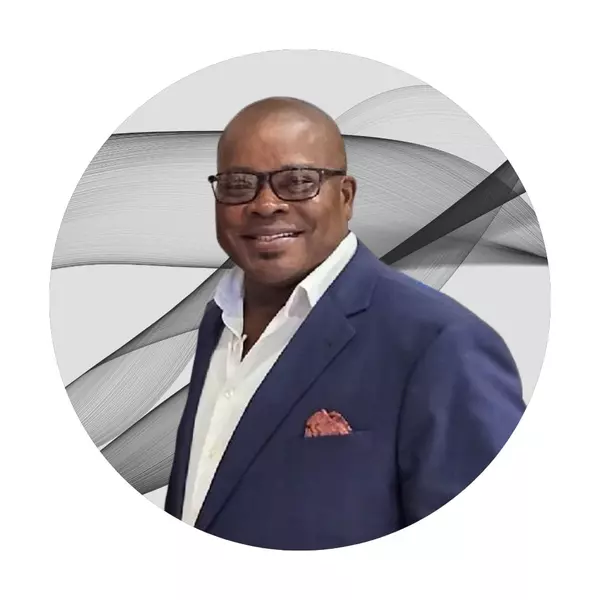
In her viral video, Katrena Roberts asks to adopt a Black mom. She’s intentional about what she would like to give to the elder she would welcome into her life, and her hopes for this chosen relationship. That request resonated with a lot of people online.
“I had a good feeling because I was earnest with my request. I knew that people would receive it well, but I did not know that it was going to go viral. I couldn’t have expected that,” she says. “Watching the virality come in and just seeing how people relate to it so much in the comments, it does make sense to me now why it has gained so much traction. I was speaking about a desire that many people, apparently, have just kept to themselves and never thought to go to a platform like social media to ask for. Then, the support and the love just pouring in. So many people, so many women, have just offered their own mothers to me. That was also something that I wasn’t expecting.”
Roberts, 30, has lived in San Diego her entire life. Born to a Black dad and a White mom, she grew up in Spring Valley and was raised by her grandparents on her mother’s side. About a year and a half ago, a familiar experience of Black girlhood helped crystallize this feeling she had been having. She’d been nannying for a friend whose Black, and that woman had offered to do Roberts’ hair for her.
“I was sitting in her office and she was braiding my hair, and she had “(The Real) Housewives” playing, and I found myself having to hold back tears and a knot in my throat because that was a really visceral moment of realizing what I didn’t have growing up, and what would have been so grounding in my Blackness,” she says. “Had I had that growing up, maybe I wouldn’t have struggled so much with my hair and thinking it’s ugly and thinking it’s just the worst part of me, had I had somebody that was able to handle it. I also shared conversations with her about what it means to be a Black woman in this world. … She just knows all this stuff because she’s lived it, and having those conversations with her made me feel very seen and very validated. That’s what sparked that thing. I wish I had this in a mother.”
Since first posting the video to her Instagram account on Oct. 17, it’s been viewed 1 million times and plenty of people have volunteered their own moms who live in San Diego to share in this adoptive relationship with Roberts. Roberts, who studied psychology in college and has worked with children in applied behavioral analysis, has also modeled and creates social media content with her partner that is focused on the LGBTQ community, took some time to talk about the positive and critical reactions to her request, her relationship with her own mother, and whether she’s found a mom to adopt yet.
Q: Why do you want a Black mom?
A: There’s so many layers to this question. I think the main thing is that I am a Black woman, so to see myself reflected in someone older and wiser, who’s done it before, who would feel an obligation to care about me, is really important. Especially as somebody who grew up in all-White circles, I know I would have really benefited from having a Black mom to feed into my Black girlhood growing up. Now that I’m old enough to recognize the effects of the absence of that, yeah, it’s important for me to fill that part that I feel like I’ve been missing. I think Black moms, just Black women in general, and I say this in my video, they’re just some of the most special people in the whole world. There’s a quote that says the most like neglected being in America is the Black woman (from Malcolm X), but they’re also the most understanding, the most compassionate, the most aware of how the outcasts are treated and that’s what makes us more open than the average person.
I wanted to be very careful with my language because I knew I was asking a group of women who have been overlooked, who have been mistreated. I was making a big request, so I used the term “adopt” because I don’t want it to be like, ‘Hey, you hold me and you take care of me.’ No, I want to swoop you up. I want to hold you, I want to care for your heart, I want to provide you a safe space. I already know you can do that for me, but let me show that I want to do that for you, so that’s why I use that language.
Q: In the video, you say that you’ve never had a Black mom and seen them and think they’re incredible; what have you seen in Black motherhood that resonated with you? That you were really wanting to have in your life?
A: I think, at least for the Black mothers that I have seen in my life, I have really good representation. When they love, they love so hard and they love so beautifully. I’ve seen my own friends not want to disappoint a Black mom, their moms, because making them proud means so much to them because of the sacrifices that a Black mom makes in order for her children to have a little bit better of a life than she did. And, you can say that about any kind of mom, but me being Black and being in this community, maybe I have a bias, but there’s a reason why people talk about it and uplift it so much, the love of a Black woman, in general. With Black mothers who are raising Black children, you have a totally different kind of responsibility on your hands, especially for Black mothers and Black sons, knowing how your child, no matter how much you set them up for the world, that they’re going to be treated differently just based off of their skin color and the generational traumas that have been passed down. They try to stop it and change it because there’s been so much pain, there’s been so much strife in their past, and they’re going to do anything for their children to not experience that. I mean, it’s a different kind of love that you have to give, it’s a different kind of standard that you have to live up to, to care for a Black child. And Black mothers, they do that. They do that every day.
Q: What do you imagine a relationship with a Black mom to be like? Was this something little Katrena used to think about and what did she picture?
A: The sad thing is, the truth of that is that little Katrena didn’t think about that because she was too busy trying to be grateful that she had grandparents and not her White mom. So, little me did try to focus on the positive because I didn’t even recognize the internalized racism that I was kind of being tossed around by. I didn’t realize (Black motherhood) was missing in my life until adulthood.
Q: Did you have a process or plan for the video? How did decide what you were going to say, and how you were going to say it, when it came to making this kind of request?
A: Prior to actually making the request, I thought about doing it for months. I had discussed it with my partner, with friends, that I really feel this need. If you want to know what actually sparked the need for me to ask for this, I was having an emotional moment and I, once again, found myself in a position of, ‘Wow, I could really use a mom right now, and I specifically want a Black mom. You know what? It’s now or never, let’s make this video.’ So, when I made it, it wasn’t planned, but I just kind of let the words come to me. I’m pretty quick on my feet, so I still was able to be careful with the language that I used. As I started to ask it, I realized that when I say, “Let me tell you what I can offer you,” I didn’t plan that. As I was making it, I’m like, ‘You know what this could sound like? That I’m needy and I just want to take, but no, let me make sure they know that I want to give first.’ I guess I just wanted people to see my heart, and whatever mother that would touch, or woman who’s not a mother, I wanted my heart to be in that.
I definitely wanted to avoid coming off like, ‘Hey, this is what I need’ and I’m sucking away from your life and not giving anything in return. Now, in retrospect, the fact that I asked for a Black mom, that’s sensitive terminology. Now that it’s already out there, I’m kind of like, ‘Oh goodness, I hope people don’t get offended by it.’ Like, that’s who I’m asking for, specifically, but it’s just true to what I need. It’s true to what I’ve wanted.
Q: You have a follow-up video where you address some criticism. What is your response to people who do not take this video positively? Who say that it’s someone else asking for labor from Black women, that sort of thing?
A: First and foremost, I’ve really had to zoom out and think about not taking it personally, but thinking about that individual and the experiences of that individual person that is, at the end of the day, just defending the Black community, defending Black women. And, rightfully so. We should take care of each other. I have to tell myself that they don’t know me, but I’m also a people pleaser, so I try to explain to the best of my abilities, like, ‘Hey, I’m someone you don’t need to worry about. I recognize what you’re saying, I validate what you’re saying, and I’m not just another person that wants to use a Black mom like “The Giving Tree.”’ I think it just speaks to the pain and the hurt that our community has experienced from racially ambiguous women because I know that’s what I am, for sure.
Q: Can you talk about why it was important to you to make sure, in your video, you definitely started with what you wanted to give? What do you think that communicates or reflects about the regard you have for Black women and the kind of relationship you’re looking to have?
A: I was hoping that that would communicate that I recognize how exhausted Black women are, and I just want to offer, I use the term “younger moral support.” I want to offer my support to you in more of a mutual relationship. Totally mutual, totally reciprocal. I also offer, ‘Let me treat you. I don’t have a lot of money, but I can buy a salad. I can buy a coffee. Let me take care of you.’
I think I’ve done a lot of work on myself, too. In my journey with Black womanhood, I feel confident in who I am today, but I just know that it would be so wonderful to have a mother figure to bounce off of each other, existing in that space together as Black women.
Q: What’s the difference, for you, between doing that with Black women friends your own age, versus someone who’s old enough to be a mother?
A: That’s really good because I have had that with friends my age, and it’s been very healing. The hair tips that I’ve gotten from my friends have been life-changing, but there’s something different I really value in intergenerational relationships. I think that they are not valued enough. They’re very underrated because, at the end of the day, there’s only so much life that I’ve lived, or my peers have lived. Especially in such a dark time like this, politically, to be able to look up to the women who have seen worse, or whose mothers have seen worse, and grandmothers have seen worse, and be able to talk that through and know we can get through anything, that’s really important. Then, I guess, this is where the selfish part comes in, but I want someone to feel like they have a special role in my life as a mother figure, and vice versa. That’s why a mentor is different than a mother; with a mother, we can just be there for each other with this understanding that I’m going to try to love you as unconditionally as possible.
Q: What does your own mom think about this? Your search to adopt a Black mom?
A: My relationship with my mother, I would describe it as uncomfortable. I’ve gone a lot of my life avoiding her because she’s put me in uncomfortable positions, or I’ve watched her put my grandparents in uncomfortable positions because they’ve always had to save her in one way or another. I didn’t want to end up like that. She’s kind of treated me like the sister who got everything that she didn’t because we were raised by the same person. I’ve never felt like she was a mother to me, even at our best in our relationship. I felt like she was a cool friend who I could get away with stuff, but even that was when I was very young, 6 or 7 years old. I don’t seek out time with her.
This is probably painful to her, and it probably brings up guilt for her for not being there, but at the end of the day, she is a White woman; even if she had been there, I believe pretty strongly that I still would have come to this place where I would still have wanted to adopt a Black mom because a girl could never have enough moms.
Q: Have you connected with anyone yet? Adopted a mom yet?
A: I have connected with some amazing women who are in the running for that title of my chosen mother. I’ve seen some potentials that I’m really excited about getting to know more, but my final selections have certainly not been made. There’s still a journey to go on, but I do know I will be picking multiple people.
Because I’m getting a choice here, compatibility is important to me. A lot of the women who are creative by nature, that’s who I really gravitate toward because I’m a weird girl, so I need somebody who gets that. There’s a lot of people who are writers, who are singers, there’s even a producer. Another thing that I’m gravitating toward is just the way they tell their stories. I love a yapper, I love someone who talks a lot. Like, give me everything, so I do gravitate toward the women who are answering these questions in long-winded ways. I love that.
I also think the women who haven’t had an opportunity to have a daughter. There are a lot of women who have had sons that never had a daughter. That makes me feel like, ‘Oh yes, I could fill that role for you.’ It makes me feel like a little bit better, like I’m not taking a mother-daughter relationship from somebody else. There are some women who are like, ‘Listen, I live on the east coast and my mother’s in California. You can be there for her, please.’ They would love for their mom to have someone close by.
Categories
Recent Posts




GET MORE INFORMATION